


Reviewed and updated August 16, 2026.
Parota is one of Mexico’s most recognizable furniture woods. Bold figure, natural color contrast, and wide boards make it attractive for dining tables, conference tables, consoles, desks, and statement pieces. Those same qualities can distract from what ultimately determines performance: drying, material selection, engineering, joinery, finish, and the environment where the piece will be used.
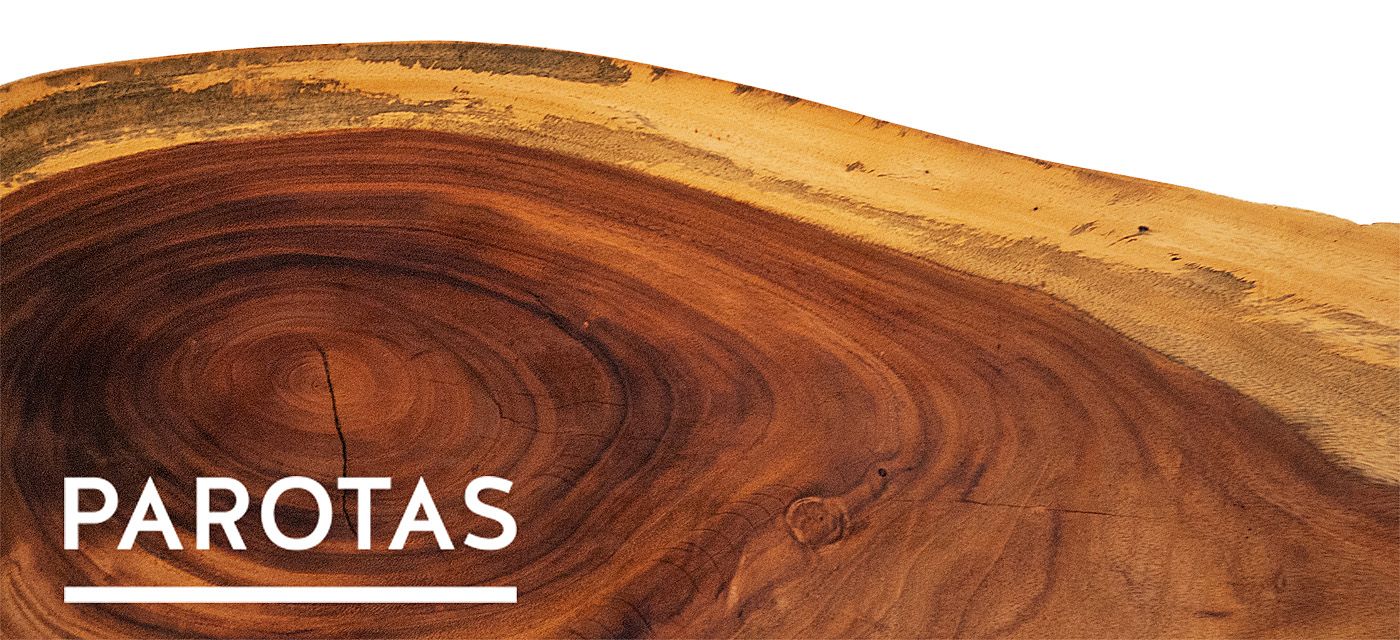
This guide explains whether parota wood is good for furniture, where it works best, what U.S. buyers should ask a supplier, and how to recognize a well-made piece. It focuses on the finished product rather than repeating the botanical and cultural history covered in the tree guide.
What is parota wood?
Parota is a Mexican common name for Enterolobium cyclocarpum. The wood commonly shows brown heartwood, lighter sapwood, and expressive figure. Color, pore structure, grain, and available width vary across trees, cuts, and production lots, so one photograph cannot represent every finished piece.
For distribution, regional names, and botanical context, read The parota tree: origin, wood, and uses. The sections below deal specifically with furniture decisions.
Is parota wood good for furniture?
Parota can be an excellent choice for interior furniture when it is responsibly selected, dried, and built for its intended use. It is especially effective when a broad surface and dramatic grain are central to the design. The species name alone, however, is not a quality grade.
Evaluate the furniture as a system: moisture condition, board orientation and width, support, joinery, adhesives, hardware, coating, and service environment. An impressive slab cannot compensate for a base that restrains normal movement or fails to support the span.
Why designers choose parota furniture
Distinctive grain
Parota can give a room a strong visual anchor without ornamental detailing. For hospitality or multi-unit work, approve a representative visual range or lot sample; natural variation is a material characteristic, not automatically a defect.
Wide boards and large-scale presence
Wide material supports generous tops with fewer seams. A one-piece slab is not always the most stable or resource-efficient answer, though. A carefully engineered top made from selected boards may offer better control while preserving the wood’s character.

Warm compatibility with other materials
Brown tones and active grain pair naturally with stone, metal, concrete, textiles, and neutral interiors. The wood can support both contemporary and craft-led design depending on edge treatment, base, and finish.
Repair potential
Solid-wood furniture can often be repaired or refinished after surface wear, provided the coating and construction allow local intervention. Buyers should obtain a documented care and repair method before applying retail oils, waxes, or polishes.
Common applications
Dining and conference tables
These are natural uses for broad, visually expressive material. The base must support the span while allowing cross-grain movement. For dimensions and seating, continue to custom wood dining tables.
Desks, consoles, and coffee tables
Shallower pieces can use grain selection to create visual continuity. Cable management, drawers, overhangs, wall clearances, and floor contact should be resolved before production.
Cabinet fronts and doors
Solid wood, veneer, or a hybrid can each be appropriate depending on weight, stability, layout, and cost. Parota veneer is not inherently a lower-quality choice: substrate, adhesive, veneer selection, edge detail, and finish determine its performance.
Headboards and architectural panels
Panels use the grain across a large visual field. Substrate behavior, attachment, jobsite tolerances, installation access, and future replacement should all be part of the detailing.
Solid parota, veneer, or engineered top?
| Construction | Main advantage | What to verify |
|---|---|---|
| Solid wood | Thickness, tactile quality, repair potential | Moisture, weight, movement, support |
| Natural veneer | Visual continuity and efficient resource use | Core, adhesive, edges, repair method |
| Laminated selected boards | Greater control of layout and stability | Glue lines, board orientation, joint design |
| Hybrid construction | Optimizes structure, weight, and budget | Clear disclosure of every material |
Drying and dimensional stability
Wood gains and loses moisture as the surrounding conditions change and moves primarily across the grain. A responsible manufacturer measures and manages moisture, stores material appropriately, and uses joinery that accommodates movement.

Before approving a wide top, ask:
- Was the material dried and conditioned for the destination?
- Are checks, voids, or repairs present, and how were they stabilized?
- How is the top attached to the base?
- Does the base support the span without locking the top across its grain?
- Are surfaces finished in a reasonably balanced manner?
- Will the room be conditioned, seasonally occupied, or open to exterior air?
Natural checks or live edges may be intentional, but they should be cleaned, stabilized, and documented. Resin fill alone does not make unsuitable structural material sound.
Can parota furniture be used outdoors?
Parota may be considered for some exterior applications, but the decision must account for rain, sunlight, standing water, humidity cycles, ground contact, hardware, and maintenance. Good exterior construction sheds water, allows drying, avoids traps, and provides access for coating renewal.
In fully exposed locations, buyers should decide whether color change and regular inspection are acceptable. Review outdoor wood furniture care before selecting the finish and maintenance terms.
How to recognize well-made parota furniture
Materials are disclosed
The specification distinguishes solid parota, veneer, plywood, composite panels, and secondary materials. “Parota” should not be the entire construction description.
Visual variation is approved
The supplier defines whether sapwood, knots, stabilized checks, live edge, and board contrast are included. A control sample or documented range is useful for repeat quantities.
Joinery matches the use
The piece is stable, joints are clean, and hardware is serviceable. Wide tops are attached in a way that accommodates seasonal movement rather than forcing the wood to remain fixed across the grain.
The finish matches the environment
The quotation identifies sheen, tactile target, expected resistance, cleaning products, and repair process. “Sealed” does not mean waterproof or maintenance-free.
Delivery and care are documented
Instructions cover acclimation, assembly, cleaning, inspection, and warranty limits. Hospitality projects should also include an operating protocol for housekeeping or food-service teams.
Basic care
- Remove dust with a soft, clean cloth; use only the moisture level approved for the finish.
- Blot spills promptly and prevent water from collecting at joints or hardware.
- Avoid abrasive pads and unapproved household mixtures.
- Use trivets, coasters, and protective pads for heat, moisture, and scratching objects.
- Keep interior conditions reasonably stable.
- Follow the specified product and method when renewal is needed.
Generic teak oil, wax, silicone polish, or multipurpose cleaner may alter sheen, contaminate a future repair, or damage a coating. If the finish is unknown, ask the manufacturer before treating it.
Responsible sourcing and U.S. project documentation
Request species and origin information, supply documentation, and an accurate bill of materials. “Reclaimed,” “sustainable,” “legal,” and “certified” are different claims and should be supported with evidence applicable to the order.
If a piece includes regulated hardwood plywood, MDF, or particleboard and is supplied to the United States, confirm applicable TSCA Title VI certification and labeling. For comparisons with other materials, see Mexican wood types for furniture.
Frequently asked questions
Is parota wood durable?
It can perform well in tables and interior furniture, but durability also depends on thickness, support, joint design, moisture, finish, and use. Species alone does not correct poor engineering.
Does all parota furniture have the same color?
No. Heartwood, sapwood, and figure vary. Reference photos should be treated as a range; repeat orders benefit from an approved lot sample or control standard.
Is parota veneer good quality?
It can be an excellent solution for panels, fronts, and stable surfaces. Evaluate the substrate, veneer selection, adhesive, edges, coating, and repair strategy.
Is a single-slab table better?
Not automatically. It may create strong visual impact, but width, drying, checks, support, and movement require careful handling. A selected-board top may be more stable and use the resource more efficiently.
What should I send for a custom parota furniture quote?
Provide furniture type, quantity, dimensions, destination, indoor or outdoor use, visual references, finish expectations, delivery city, and schedule. For repeat quantities, include prototype approval.
If a tabletop develops a new opening, review the guide to solid wood cracks and seasonal movement before applying oil, filler, or adhesive.
Turn the material into a buildable specification
PAROTAS develops furniture for residences, hotels, restaurants, and professional interiors. Review the custom furniture project process and, when quantities and destination are known, request a custom furniture quote.
Technical sources for editorial review
- USDA Forest Products Laboratory, Enterolobium cyclocarpum technical sheet: https://www.fpl.fs.usda.gov/documnts/TechSheets/Chudnoff/TropAmerican/htmlDocs_tropamerican/Enterolobiumcyclocarpum.html
- USDA FPL, Wood Handbook: Wood as an Engineering Material: https://www.fpl.fs.usda.gov/documnts/fplgtr/fplgtr282/fpl_gtr282.pdf
- USDA FPL, Moisture Relations and Physical Properties of Wood: https://www.fpl.fs.usda.gov/documnts/fplgtr/fplgtr282/chapter_04_fpl_gtr282.pdf
- USDA FPL, Finishing Wood: https://www.fpl.fs.usda.gov/documnts/fplgtr/fplgtr282/chapter_16_fpl_gtr282.pdf
- U.S. EPA, composite wood products and TSCA Title VI: https://www.epa.gov/formaldehyde/frequent-questions-consumers-about-formaldehyde-standards-composite-wood-products-act
