


An open line in a wood tabletop might be a split within one board, a glue joint separating between boards, a construction joint moving as intended, or a crack limited to the finish. A photo can make these conditions look similar, but they do not share one cause or one repair.
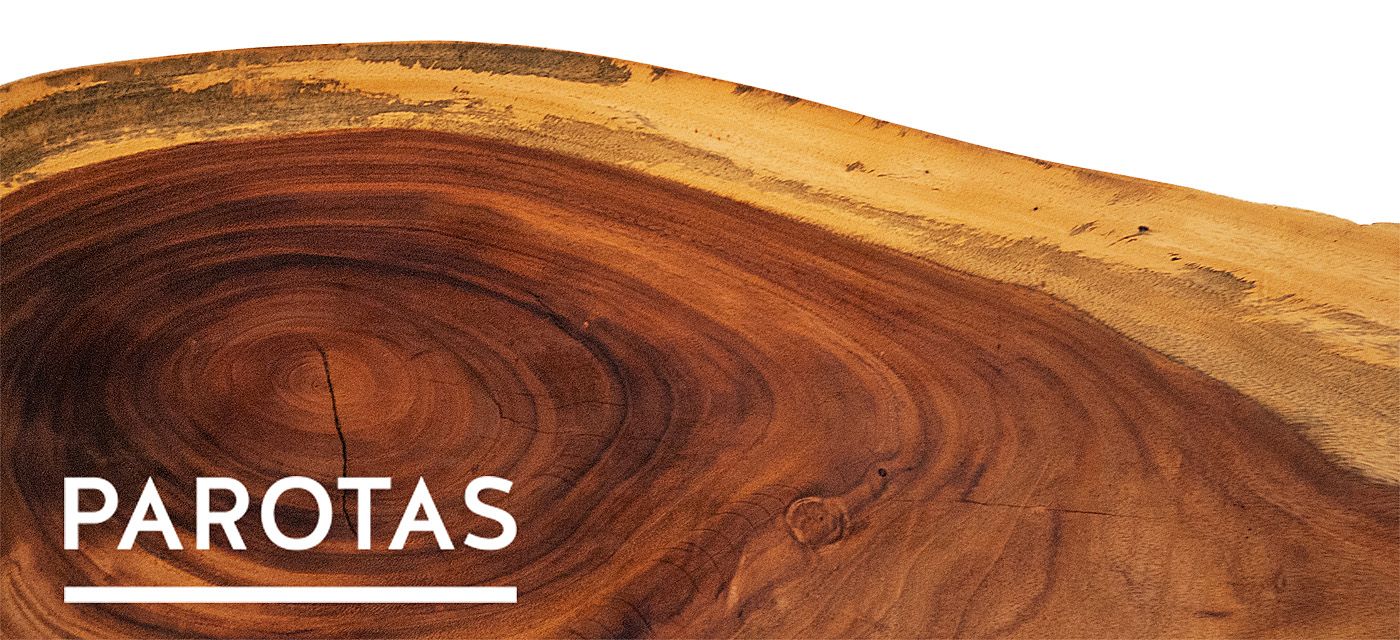
The underlying science starts with a normal material property: wood is hygroscopic. It exchanges water vapor with the surrounding air and moves toward an equilibrium moisture content. As the air becomes more humid, wood gains moisture and swells; as the air becomes drier, it loses moisture and shrinks. The USDA Forest Products Laboratory’s Wood Handbook explains that this movement is greatest across the grain and differs in the tangential and radial directions.
Movement does not make solid wood defective. Damage becomes more likely when the moisture change is large or rapid, when the material was not conditioned for service, or when construction prevents the tabletop from moving.
First, identify what opened
Look at the line in good light before applying oil, wax, water, filler or glue. Photograph it next to a ruler and record the date. Then compare the visible pattern:
| What you see | Possible cause | What to inspect |
|---|---|---|
| A line following the grain within one board | a check or split in the board | whether it changes seasonally, runs through the thickness or starts at an end |
| An opening exactly between two boards | glue-line failure or panel stress | joint surfaces, adhesive history, restrained movement and moisture |
| A split close to a screw, cleat or rigid base | fastener may be restricting movement | slots, connectors and grain direction |
| A pale or crazed line only at the surface | finish checking | depth, flaking and finish type |
| Cupping or warping along with the opening | uneven moisture or unbalanced construction | different exposure on each face, storage and support |
| Soft wood, odor, active stain, holes or fresh powder | a problem beyond normal movement | leak, decay, mold or insects; seek professional inspection |
Relative humidity makes wood move
Indoor air changes with weather, heating and air conditioning. A table may travel from a humid shop or warehouse to a centrally heated home in winter, then experience a more humid summer. Wood does not respond instantly or uniformly through its thickness. Board size, coating, species, grain orientation and the speed of the environmental change all influence the response.

USDA research explains that below the fiber saturation point, wood swells as it gains bound moisture and shrinks as it loses it. Tangential movement—parallel to growth rings—is generally greater than radial movement. This is why a wide solid wood top changes far more across its width than along its length.
There is no single relative-humidity number that guarantees a table will never split. A practical goal is to avoid extremes and abrupt swings while maintaining a reasonably stable living environment. The Canadian Conservation Institute likewise identifies humidity changes as a cause of splitting, cracking and finish damage in wooden furniture.
Kiln-dried wood still moves
Wood for furniture should be dried and conditioned for a moisture range that makes sense for its expected service environment. If a tabletop is fabricated while its moisture content is far from the level it will reach in use, the later adjustment can be larger.
But “kiln-dried” does not mean “permanently dry” or “unable to move.” Drying removes moisture; it does not remove wood’s ability to exchange vapor with the air. Chapter 13 of the USDA Wood Handbook explains that proper drying, handling and storage minimize later changes, while the remaining moisture still tends toward equilibrium with the surrounding atmosphere.
One moisture-meter reading is not a complete diagnosis. Meters have species settings, depth limits and other constraints, and the surface can differ from the core. For a valuable piece or recurring failure, a qualified professional should record several readings, room conditions and construction details.
A solid tabletop needs room to move
The width of a solid wood top changes as moisture changes. A base must support the top without locking that cross-grain movement. Properly designed slotted holes, tabletop fasteners or sliding connections can secure the top while allowing expansion and contraction.
If a wide top is rigidly screwed down at multiple points across the grain, the wood still tries to change dimension. Stress may concentrate at a glue line, around a fastener or inside a board. Adding more rigid screws can make the underlying problem worse.
Panel construction also matters. Board selection and orientation, joint preparation, gluing, balanced finishing and support all affect performance. No single detail guarantees a motionless tabletop; the assembly must work as a system.
Is every crack a defect?
No. Live-edge and character-grade tops may intentionally retain checks, knots or voids that have been stabilized and accepted as part of the design. A documented line that was present at delivery and remains stable can be a material characteristic. A new, growing or structural opening deserves review.
Ask these questions:
- Was the line visible in delivery photos?
- Does its width change with the season?
- Does it pass through the full thickness?
- Is it near a glue joint, base or heat source?
- Does it affect stability, cleanability or safety?
- Is the finish lifting, or is it simply following wood movement?
The Canadian Conservation Institute cautions that an old crack does not necessarily prove a current humidity-control problem. Dated photographs help distinguish a stable feature from active progression.
What to do when you find a crack
1. Document it before changing anything
Take overall and close-up photos. Measure approximate length and width without forcing the opening. Record the date, room, recent use, any move or HVAC change, and temperature or relative humidity if available.
2. Stabilize the environment
Move the table away from direct HVAC discharge, radiators, intense window sun and water sources if that can be done safely. Do not make a sudden environmental correction. Rapid changes can create additional stress.
3. Inspect the underside
Without disassembling the table, look at how the top attaches to the base. Note slotted holes, loose hardware, angled screws, cleats, moisture stains and prior repairs. Do not flip a heavy or unstable table without appropriate help.
4. Contact the maker or a qualified specialist
Share photographs and history. A furniture maker, conservator or repair specialist can distinguish a cosmetic repair from a failed joint, restricted movement or an environmental problem.
5. Correct the cause, not only the gap
Filling an active opening with a rigid material may hide it temporarily and concentrate stress during the next seasonal cycle. The correct approach depends on whether the opening is stable, the table’s function and its finish. A professional repair may involve adjusting fasteners, stabilizing the environment, rebuilding a joint or selecting a compatible fill.
What not to do
- Do not pour water into the crack.
- Do not apply oil as a way to “rehydrate” the structure.
- Do not inject glue until you know whether the opening is still moving and which surfaces failed.
- Do not drive screws across the grain without reviewing the assembly.
- Do not sand a warped surface flat before stabilizing the cause.
- Do not point a humidifier at the table or change room conditions abruptly.
- Do not follow a generic repair video when the table is unstable, valuable, moldy or actively wet.
The Canadian Conservation Institute specifically notes that wood does not need to be “fed.” Oil or polish cannot substitute for a stable environment and may complicate later finish or glue work.
How to reduce the risk in a new solid wood table
When buying or commissioning a table, ask about:

- the expected environment and use;
- drying and conditioning of the material;
- the tabletop’s construction;
- how the top attaches to the base;
- finish coverage on faces, edges and concealed areas;
- accepted natural variation and any existing checks;
- care instructions and warranty coverage;
- the process to follow if a new opening appears.
Species and appearance matter, but they do not replace construction that accommodates movement. The guide to wood types explains material-selection factors, while parota wood furniture covers parota in furniture applications. This article is limited to tabletop movement and diagnosis.
Example: a gap that appears during heating season
Consider a multi-board top delivered during a humid summer. Months later, heated winter air lowers indoor humidity and a gap appears exactly at a glue line. Moisture loss may be contributing, but the joint and base attachment still need inspection. The environment explains why the wood moved, not necessarily why that particular location opened.
On another table, a fine white line that remains the same width and affects only the clear film may be finish checking. Wood glue would not repair that coating. Diagnosis starts by identifying the layer and geometry that failed.
Frequently asked questions
Can parota wood crack?
Yes. Parota, like other woods, exchanges moisture with the environment and changes dimension. Risk depends on drying, construction, grain orientation, part size, finish, fasteners and service conditions. Species name alone cannot diagnose a split.
Will oil close a crack in a wood table?
Usually not. A compatible oil can change appearance or surface protection, but it does not reconnect a failed glue joint or correct a rigid attachment. It can contaminate surfaces that may later need adhesive.
Will the crack close when humidity rises?
An opening caused by seasonal shrinkage may become smaller, but not every split closes. Broken fibers, a failed glue line or a rigid filler may prevent recovery. A recurring or functional crack still needs evaluation.
Should I use a humidifier?
Only as part of a measured plan for the whole room or building, not as a direct treatment aimed at one table. Avoid rapid changes and condensation. Measure conditions first and follow equipment and building guidance.
When should a professional inspect the table?
When the opening is growing, runs through the top, affects stability, occurs at a structural joint, includes loose parts, or appears with active moisture, mold, insects or a valuable finish. Recurring failure after a previous repair also warrants expert review.
Choose and care for solid wood with realistic expectations
Solid wood retains evidence of the tree and continues to respond to its surroundings. A reliable table combines appropriately conditioned material, movement-friendly construction, a suitable finish and care that matches the room.
If you are planning a new table, use the dining table size calculator and review wood dining tables. For a project with defined dimensions, materials and use, request a custom furniture quote.
Technical sources for editorial review
- USDA Forest Products Laboratory, Chapter 4: Moisture Relations and Physical Properties of Wood (2021): https://research.fs.usda.gov/treesearch/62243
- USDA Forest Products Laboratory, Chapter 13: Drying and Control of Moisture Content and Dimensional Changes (2021): https://research.fs.usda.gov/treesearch/62261
- USDA Forest Products Laboratory, Frequently Asked Questions — wood shrinkage and moisture: https://research.fs.usda.gov/fpl/faq
- Canadian Conservation Institute, Basic care — Furniture and objects made of wood: https://www.canada.ca/en/conservation-institute/services/care-objects/furniture-wooden-objects-basketry/basic-care-furniture-objects-wood.html
- Canadian Conservation Institute, Incorrect relative humidity: https://www.canada.ca/en/conservation-institute/services/agents-deterioration/humidity.html
